
There is a contradiction at the centre of glass, in the sense that it is traditionally considered to be so fragile that a slight impact, fall or even loud noise can cause it to shatter into sharp pieces, and yet it is also strong enough to block bullets and be structurally sound.
Both aspects of glasswork are seen in the mystery of Prince Rupert’s drops, which have a tail that can cause the glass to explode if touched slightly, but a head as strong as steel.
The reason why it is so strong is the same reason why tempered glass is exceptionally strong, hard-wearing and breaks into mostly harmless chunks of glass rather than large shards.
Compared to annealed glass, or glass that is conventionally manufactured and uniformly cooled, tempered glass is very quickly cooled, creating a huge number of microscopic stresses that allow it to withstand significantly more weight, pressure and damage.
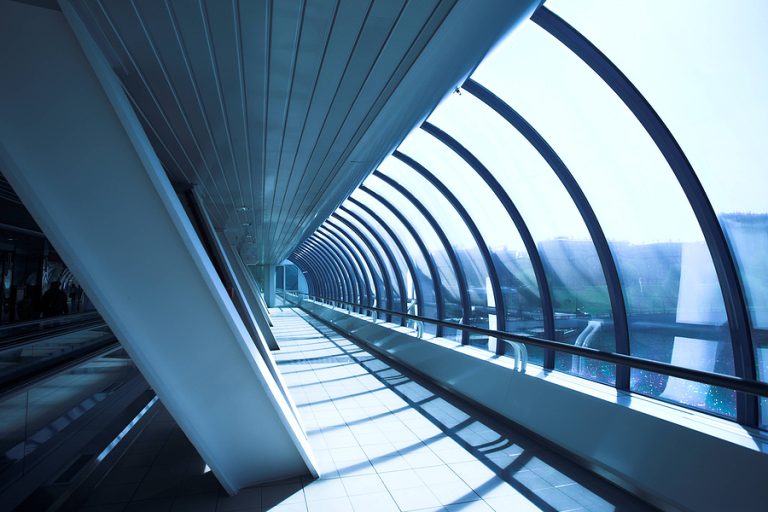
This makes it ideal for storefronts, partitions, staircases, shelves and even walk-on floors, where it can provide extra durability and safety for people walking near and on it.
How much more durability? The exact strength will vary depending on the nature of construction, purpose, size, thickness and shape, but it will typically offer between four and five times greater strength than an annealed glass pane of similar dimensions.
As well as this, it can potentially be laminated, which can provide additional strength as well.
Laminated glass panes, which are glass layers bonded together with adhesive polymers, are up to twice as strong as regular glass.
Unlike tempered glass, which is designed to shatter, laminated glass is designed to hold its shape even when it is seriously damaged, which makes it essential for car windscreens and some other uses where glass needs to hold its shape as much as possible.
The two types are often combined, particularly for shop fronts, to help reduce the risk of break-ins.