
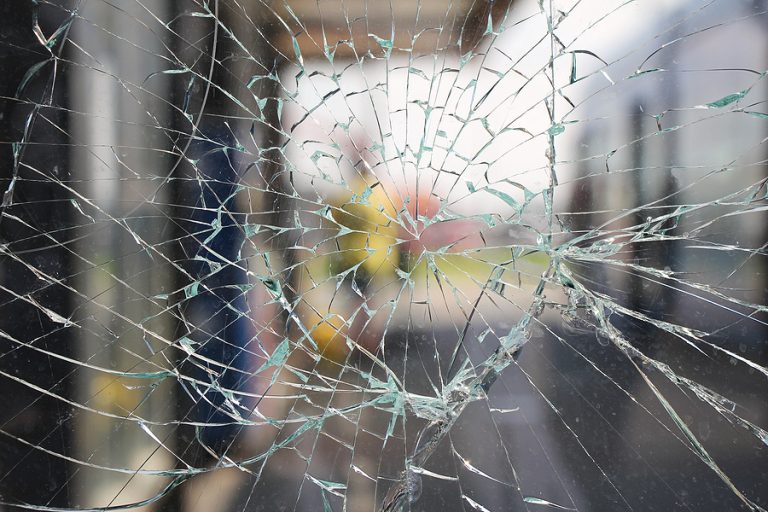
There are many myths or misconceptions about glass, which are often not only untrue, but imply a fragility to glass that is diametrically opposed to the sheer strength of many structural glass products.
One of the most famous of these is the idea that a sufficiently high-pitched noise can shatter glass. Most people have either heard of or seen a scene in a comedy film of an opera singer shattering a wine glass with a high-pitched scream.
However, is this actually true? And if it is, would this actually affect windows, doors or curtain walling in real life?
The answer to the latter question is no, but to understand why, we need to explore whether high-pitched glass shattering is true at all.
Can A Singer Damage Glass?
In the abstract, there is some truth to the idea that a high-pitched noise can damage glass, although it often requires a confluence of circumstances that are unlikely to be found in real life.
The principle behind the idea is that glass, like all other materials, has a resonant frequency, or the rate at which it will vibrate if touched or hit by a sound wave. This is why wine glasses will make clear notes when filled with water and a wet finger is run around the rim.
It is theoretically possible for a sound to match that resonant frequency and thus be absorbed by the glass. However, three factors need to be in place for a singer to damage glass:
- – The sound needs to be at the same frequency as the glass, which is roughly 556 hertz. It does not have to be a high C note, but any note which matches that frequency.
- – The sound needs to be very loud, hitting the glass at 105 decibels.
- – The glass needs to be thin, fine, and typically round in shape, typically with microscopic defects and fracture points.
This experiment is typically undertaken with a champagne flute; it is very thin, with an elongated bowl that causes the glass to resonate more easily and shatter.
Are Your Windows In Danger Of Damage From Noise?
No, your glass partitions, staircase, windows, walk-on floors or any other piece of glazing is in no danger of shattering through singing alone.
Most structural glass is made up of multiple layers, which means that the vibrations are very quickly dampened before they have the chance to resonate strongly enough to cause any damage.
Even the only proven example of this happening, filmed for the TV show Mythbusters, required a vocal performance twice as loud as typical speech, a particularly thin crystal glass and no fewer than 12 separate attempts. A pint glass or a glass tankard would be too thick to break this way.
Most glass used in offices is orders of magnitude thicker than this, designed to handle significant physical impacts and sound waves more characteristic of explosions than singing voices.
Even if that was not the case, structural glass is typically strengthened through tempering processes and lamination to make it even stronger and more structurally robust, even in the rare case that they do break.