
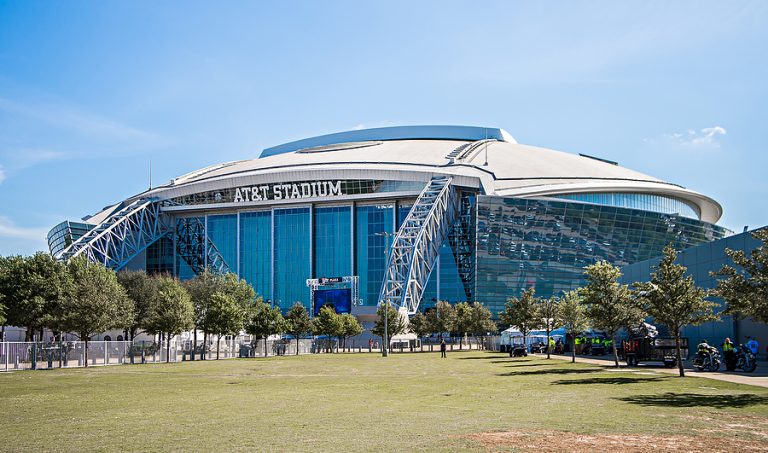
With the end of the club football season and the upcoming FIFA Men’s World Cup, huge stadiums are back in the public zeitgeist, especially since many major teams and cities are considering significant renovations or complete rebuilds.
In 2025, Everton Football Club moved into the brand new Hill Dickinson Stadium, Tottenham Hotspur similarly recently moved into a heavily glazed new stadium that has been described as amongst the best in the world, and Manchester United are considering plans to replace Old Trafford.
Heavily glazed stadiums are the primary design archetype seen today, but using such a dynamic, effective and distinctive material can help with the unique challenges a sports stadium faces, as well as require some mitigation in order to avoid adding new challenges to the design and implementation of a stadium.
Can Glazed Roofs Allow Grass Sports To Be Played Indoors?
The initial reason why glass started to be used in stadiums was as a way to allow sports played on natural grass to be played indoors in a more controllable climate, without strong winds, rain, snow or intense sunlight affecting play.
This was the case with the very first indoor dome stadium, the Astrodome in Houston, Texas.
Due to the typically extremely hot climate in Houston during the summer, it would be considered unsafe and difficult to play sports such as baseball and gridiron football in an open stadium.
This led to the proposal and eventual construction of a domed stadium with a glazed roof designed to allow air conditioning and natural sunlight.
It worked, to a degree, but an unforeseen issue was that the glass would create additional unexpected glare that would get in the eyes of players.
Fixing this issue by painting over the glass skylight caused the grass to die, necessitating the implementation of artificial turf, which later gained the brand name AstroTurf due to its initial use in the AstroDome.
Modern glass in stadiums is designed far more with player and audience comfort in mind, typically featuring UV-shielding coatings alongside other ways of controlling the quality of turf to minimise the effects of glaring sunlight.
Can You Innovatively Integrate Glass Into A Stadium’s Design?
The other key reason to implement glass into stadiums to a significant degree is the scope it enables to create truly unique architectural designs that are both functional and exceptionally beautiful.
One of the best examples of this is the Allianz Arena in Munich, Germany. Its unique transparent panels allow for the whole stadium to be lit up in bright colours, something that would be far less practical for a stadium made of concrete or steel.
On an even more extreme level, the Beijing National Olympic Stadium in China uses glass features in perhaps one of the most innovative ways ever seen, with a mix of glazing and metal lattices that has led to the stadium being affectionately known as the Bird’s Nest.
Because structural glass has a lot of scope to be built in unique shapes, sizes and dimensions, glass can become a pivotal design element, particularly when used to emphasise the use of other materials.